Bedroom Decorating Ideas for Autistic Adult
Infinite: the final frontier and, for people with autism, the thing we need nigh when the weight of the earth feels similar a million-billion galaxies (or, you know, a pandemic causes a global lockdown and takes abroad the certainty nosotros thrive on).
In the past, an autism sensory room has always been the go-to recommendation to provide this. However, crafting the perfect safe space can prove problematic, when all the autism sensory room ideas you accept, are grounded by the resource you don't.
All the same, your voyage into autism sensory rooms doesn't take to end hither as, inside this post, you volition learn how to bring your sensory room ideas to life, regardless of infinite in your home or budget available, as well as all the boosted know-how you need to plough your sensory relief dark-green and start an indoor or outdoor sensory garden.
[To skip to the tips on creating the ultimate sensory room click hither. Or, to go right to the sensory garden discussion, click hither]
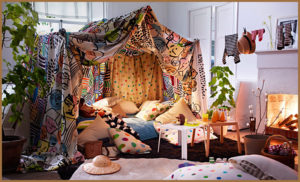
What Is a Sensory Room?
Nosotros've all had those moments when we put our heads down to concentrate, try to gauge our thoughts so suddenly *CRUNCH!* you realize you're sitting next to the world'due south noisiest eater. In whatsoever other circumstance, you plow the other cheek, but something about that exact sound makes it impossible to ignore, as you grind your teeth, clench your fists and wish you could exist anywhere else.
For autistic people, this feeling of beingness attacked past our senses is more common than you might call up, as difficulties in sensory processing and interoception make regulating stimuli much more than overwhelming (and in some cases harmful for long-term sufferers).
Later, this tin can make experiences which impact on our senses i.e. bright lights or loud music feel incredibly distressing and, like spending a moment with the previously mentioned chew-nado, we need a interruption.
A location specifically designed to either distract the senses with stronger stimuli or downright block information technology out (aka a sensory room) take long been the doc's orders here – a prescription start provided in the mid 70s, when the rooms were known as 'Snoezelens' (a title comprised of the Danish words 'snuffelen' which means to sniff and 'doezelen' which ways to doze – no these won't be on a quiz, I just thought it was cute to mention).
Additionally, sensory processing rooms aren't simply for autism sensory therapy as, in the 50 years of their existence, they take come to be used every bit back up tools for people with a range of different conditions including:
- Down's syndrome
- Dementia*
- Alzheimer's*
As such, there are clearly a lot more perks to these stimuli safety nets than showtime meets the middle – many of which also do good those on the spectrum who don't take sensory processing disorders.
[*Lacks substantial evidence]
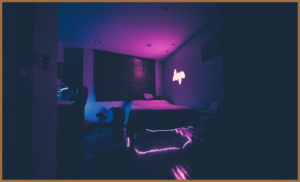
What Are the Benefits of a Sensory Room for Those Without a Sensory Disorder?
Despite their proper name, sensory rooms aren't ever for sensory purposes (and, some of the time, they aren't even rooms – I know, when will the lies end?). Instead, due to their decluttered designs and non-intrusive aura, most sensory rooms will take on diverse roles in destressing their users, besides as cooling aggression and accommodating relaxing those who enter.
Furthermore, sensory rooms have a history of beingness used as development tools, examples of which include reports of autists who, after claiming a zone equally their own, have displayed signs of increased independence, every bit we build our confidence in an area fit for our needs.
Yet, while this can allow sensory rooms to be seen as somewhat of a dwelling occupation therapy kit, I would strongly deter people from viewing them as solely an opportunity to teach (lest you turn something which should be fun into something tedious).
Of course, sensory rooms don't take to exist an isolated environment either. So, if exercise want to use the location to build social skills, then you are more welcome, only remember to create a space large enough for two.
Additionally, building a large sensory room makes it the platonic location for sharing information such as an upcoming trips or delivering social stories.
But, now that you know a piddling about the wonders of these sensory sanctuaries let's expect at how to build ane.
How to Bring Your Autism Sensory Room Ideas to Life
With so many clear benefits to building a sensory room, you might have convinced yourself that edifice a base of operations is going to be a tricky task – later all, nothing worth having comes easy. All the same while, yes, creating the ultimate sensory room isn't the simplest job, this doesn't hateful it has to be complicated either – so long as you keep these things in mind for the structure.
1. Fit for purpose.
Sensory rooms come up in all shapes and sizes to match the need of the varying spectrum-dweller they will be assigned to. And then, before you begin laying downward the foundations for your sensory fort, offset consider why you're setting information technology upward.
In addition to those which were previously mentioned, some purposes of a sensory room that yous might want to consider include making it a place for:
- Fun
- Relaxation
- Privacy
- Socialising
- Developing abilities such as motor skills (through the use of tangle toys and such)
ii. Sensory room basic pattern.
Does the sensory room need a door for privacy? Will information technology exist strong enough to survive a meltdown? Is electricity needed and how can you make sure that you lot won't walk in and meet our skeleton flashing like a looney tune who's simply been hit past thunder? In one case you have decided on what the purpose of the sensory room is, in that location are nonetheless lots of things left to consider. However, regardless of which direction you set your sails, make sure that every journey starts with a plan.
Equally any autistic person volition tell you, plans are the best and, when it comes to something where every detail counts (right down to which non-obtrusive colour you use), everything should, and needs, to be considered.
What's more, a sensory room program tin be an ideal mode to introduce an autistic person to their 2d home as, despite good intentions, springing the finished product on any autist will virtually likely outcome in anxiety and the harbouring of bad feelings towards the last build.
3. Location, Location, Location.
They say that location is the most important matter to consider when setting up camp but, when it comes to creating a sensory room this isn't quite the case. Certain, you desire to pick a position which won't be disturbed (every bit it can exist hugely detrimental to tamper with a sensory room one time it has been ready) only, other than that a sensory room can exist anywhere, including:
- A disused wardrobe
- a blanket over a table
- a pillow fort
- an indoor tent
- a bedroom
- an attic
- a purpose-built extension
Nevertheless, this doesn't mean yous should just go plopping your foundations anywhere, as there is nevertheless the small matter of what senses will exist impacted on in the sensory room. As such, consider how the fourth dimension of day/twelvemonth will impact the volume of smells, sights and sounds in the expanse and also take a moment to ponder whether these will touch the overall safety of the room for the person it is congenital for.
four. Appearances aren't everything.
When I was younger I had a sensory den in a garden shed (which was covered in spiders) one in the kicking of my dad's trounce-up Nissan Primera (which was covered in spiders) and finally the entire front room of the house – which although inconvenienced the remainder of my family, you really can't concur it confronting me when the alternative included making many 8 legged friends.
Over time this taught me that a sensory room actually tin can take on whatsoever aesthetic, so long as it gets the job done. So, when looking for autism sensory room ideas, don't get bogged downward by the many glamorous Hugh-Hefner-Esque designs y'all will notice on sites like Pinterest.
Of course, looking around for inspiration is never a bad thing, but remember not to get lost in trying to indistinguishable what you see online. Instead, focus on elements you tin adapt from others, into your ain project – all the while remembering that what might work well for ane autist might not work quite too for others.
v. Never cease looking to improve.
If y'all find that, after you take completed the sensory room, your loved one has go a bit of a Goldilocks (finding likewise much or too little of some aspect of a setting), then don't immediately consider knocking down the whole project and starting again. Instead, try to understand what the exact problem might be and from at that place see how it tin be improved i.e.
Sight: If the room is too vivid, consider installing a light dimmer or a sunblind to cake out windows when necessary or, if the autistic person is unhappy in the construct, maybe consider if there is something outside which could be causing the discomfort.
Sound: If things are too loud consider setting upwardly some groundwork music to play over the tiptop, similar the Spotify pianoforte rain mixes (which I personally love) or, why non purchase more cushions to pad walls and create makeshift soundproofing?
Smells: If a potent odor is causing disruption, candles are oft the first choice for resolving this. All the same, open flames near a lot of makeshift D.I.Y. has a habit of ending in disaster. So, try introducing strong-smelling oils to run on the autists arm's or under their nose as this can promote positive tactile feelings and is less likely to stop in a 999 call.
Furthermore, virtually autistic people take a long time to adjust to a new matter and, seeing a new structure appear before our optics, can exist quite alarming at first. Therefore, if an autists is ignoring a sensory processing room in the initial stages of introduction, don't exist disheartened and instead potentially create a social story to warm us upwards to the idea or give the autistic person time to accommodate.
Bonus: Additional Items.
Don't get me incorrect, I dearest it when businesses make items specifically for autistic people simply, in recent years, certain production peddlers have plant that by whacking a 'for autism' label at the finish of their gizmos, they can hyke up the prices and accept reward of our wanting community.
For many, this not only leaves a sour taste but information technology tin besides make the prospect of a perfect sensory room seems like a luxury for the rich. Yet, if you search for like items without whatsoever mention of autism or sensory in their titles, you lot will speedily find that many of these trinkets are quite affordable for example:
- Disco balls
- Lava lamps
- Tangle toys
- Beanbag chair
- Fidget spinners
- Ball pits
- Chimera machines
- Weighted blankets
- Pin fine art need toy
- Chewable jewellery
What to Consider When Creating a Sensory Garden
Autistic people are often seen every bit textbook introverts despite the fact that many of us unabashedly love the outdoors (I mean, merely look at Chris Packham, Alan Gardener and Dara McAnulty). As such, sensory gardens have become large business organization for our community in contempo years – which is something to celebrate because how, in certain areas, sensory gardens can exist seen equally sensory rooms two.0.
Like sensory rooms, sensory gardens are all about creating environments in which a person can ameliorate regulate their senses through isolated interactions, only instead of gadgets and enclosed spaces, information technology'south garden life and the keen outdoors – an additional wrinkle which brings with it opportunities to develop creativity, meliorate time management and catch a sugariness tan on a sunny day.
Although sensory gardening doesn't differ much from regular gardening (meaning that it can exist done at an allocation, in a greenhouse or indoors with plant pots), it does differentiate itself in that, earlier considering what the garden volition grow into, it'southward important to think most how it will shape the autist i.e.
- Is this a task to build confidence (then don't use besides enervating plants)
- Is this something to help with cooperation (will y'all need help with information technology yourself)
- Will the garden be somewhere nosotros tin can go to relax (and then we might need somewhere to sit)
- Do you lot desire to strop a detail sense (in which case consider what senses the garden should provoke)
While no one is going to accuse me of having a green pollex any time presently, I wanted to terminate by including a few recommendations I have found to get those in the green spirit going. Of course, this lack of plant knowledge does mean I am incapable of saying how things will truly turn out. However, with my knowledge of the spectrum, what I can confirm is that the grass volition ever exist greener for a sensory gardener on the spectrum.
A list of recommended plants for sensory gardens (with labels for those which can be grown indoors, those which tin be grown outdoors and those which tin be grown indoors and outdoors) include:
Brightly Coloured Flowers:

- Sunflowers (outdoors
- Poinsettia (houseplant)
- Peace Lilly (houseplant)
- Dahlias
- Marigold
Strong Smelling Plants:

- Lavender (houseplant)
- Jasmine
- Chocolate Cosmos
- Mint/Spearmint (houseplant)
- Peony
Edible Plants:

- Pumpkin
- Chamomile
- Runner beans
- Chives (houseplant)
- Tomatoes (houseplant)
- Basil (houseplant)
Carry on the Conversation
Have y'all got any hints on how to create the ultimate sensory room/ garden? Allow me know in the comments below. And, if you would like to help Autistic & Unapologetic abound, then why not share this mail on Facebook or Twitter? It's a great way to get these posts seen by those who might need them but might, otherwise, miss them.
As always, I tin can also be plant on Twitter @AutismRevised and via my email:AutisticandUnapologetic@gmail.com.
If you like what you take seen on the site today, then show your support by liking the Autistic & Unapologetic Facebook page. Also, don't forget to sign upwardly to theAutistic & Unapologetic newsletter (constitute on the sidebar on laptops and underneath if you are reading this via mobile) where I share weekly updates as well as a fascinating fact I have found throughout the week.
Give thanks you lot for reading and I will see you lot next week for more thoughts from across the spectrum.
Source: https://autisticandunapologetic.com/2020/04/12/autism-sensory-room-ideas-building-a-safe-space-for-autistic-people/
0 Response to "Bedroom Decorating Ideas for Autistic Adult"
Post a Comment